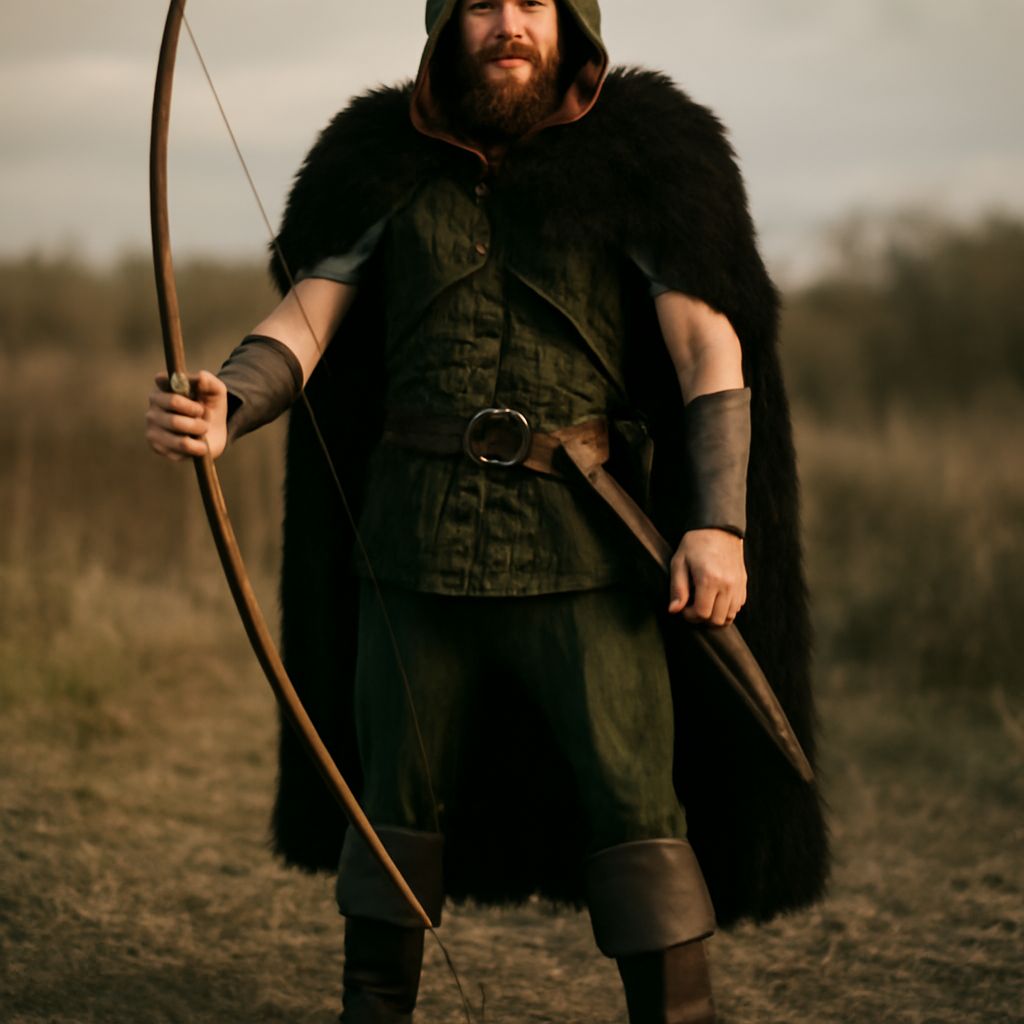
Build a capable wilderness scout who can find a trail, spot an ambush, and support the party with a bow. A ranger with human ancestry can fill those roles without committing to a single kind of encounter: its best choices work together from the journey to the first round of a fight.
This guide uses the 2014 fifth-edition Player’s Handbook ranger and human rules. The example uses the standard human traits and the original Hunter archetype, not the 2024 ranger or the optional replacement features from later books. Agree on the rules at your table before filling out the sheet.
Pick the human traits first
A standard human ranger gains +1 to each of the six ability scores. That broad increase can round out several odd scores at once. With the standard array, assign 15 to Dexterity, 14 to Constitution, and 13 to Wisdom before applying the increases. The resulting 16 Dexterity helps ranged attacks and stealth, while 14 Wisdom supports perception and spellcasting.
The 2014 variant human is a different option. If the DM allows the optional feat rules and this variant, it replaces the standard ability score increase with +1 to two different scores, proficiency in one skill, and a feat. It does not also receive the standard +1 to every score. Choose it when an early feat serves a clear plan; use the standard option for a straightforward, broadly capable character.
Neither choice makes every human ranger the same. Background, skill selection, favored terrain, and fighting style determine what the character can contribute when there is no target in bow range.
Prepare for the journey
Choose Perception, Stealth, and Survival from the ranger’s class skill list. Perception helps notice threats; Stealth supports reconnaissance; Survival helps follow tracks and deal with the wilderness. Tell the group what you discover rather than racing ahead alone. A scout’s information matters most when the rest of the party has time to act on it.
At first level, pick a favored enemy and favored terrain that fit the campaign. Ask the DM what kinds of threats and environments are likely to appear. The 2014 features give specific benefits in their stated situations; they are not a universal bonus against every enemy or an automatic solution to every travel problem.
A human ranger with a longbow can watch a trail from a useful distance, but vision, cover, and the rest of the party’s position still matter. Carry two shortswords for a close fight and wear scale mail if you prefer its protection. Scale mail imposes disadvantage on Dexterity (Stealth) checks, so consider lighter armor when quiet movement matters more.
Choose a fighting style and an archetype
At level 2, Archery adds 2 to attack rolls made with ranged weapons. It improves accuracy, not damage. Spellcasting also begins at this level: hunter’s mark can reward repeated weapon hits against a chosen target, while cure wounds provides an emergency way to restore hit points. Keep track of spell slots and concentration instead of assuming every effect can stay active together.
At level 3, choose the Hunter archetype. Its Colossus Slayer option adds 1d8 damage when a weapon attack hits a creature that is below its hit point maximum, once per turn. Look for a wounded enemy your group is already trying to stop. The feature rewards focus without requiring the ranger to stand beside the target.
For a different concept, consider the 2014 Beast Master if you want an animal companion. Read that archetype’s action requirements before choosing it: directing a companion creates different decisions in combat from the Hunter’s simpler damage option.
A ready-to-play example
Start this human ranger at level 3 with the standard array arranged as Strength 12, Dexterity 15, Constitution 14, Intelligence 10, Wisdom 13, and Charisma 8. After standard human increases, those scores become 13, 16, 15, 11, 14, and 9. Take Archery, Hunter, and Colossus Slayer; carry a longbow, two shortswords, scale mail, and an explorer’s pack. Choose hunter’s mark, cure wounds, and goodberry as the three ranger spells known.
In the party, scout with a partner, report signs of danger, and shoot from a position with an escape route. When an ally is wounded, decide whether healing now matters more than attacking. That choice makes the character useful in the field and under pressure.