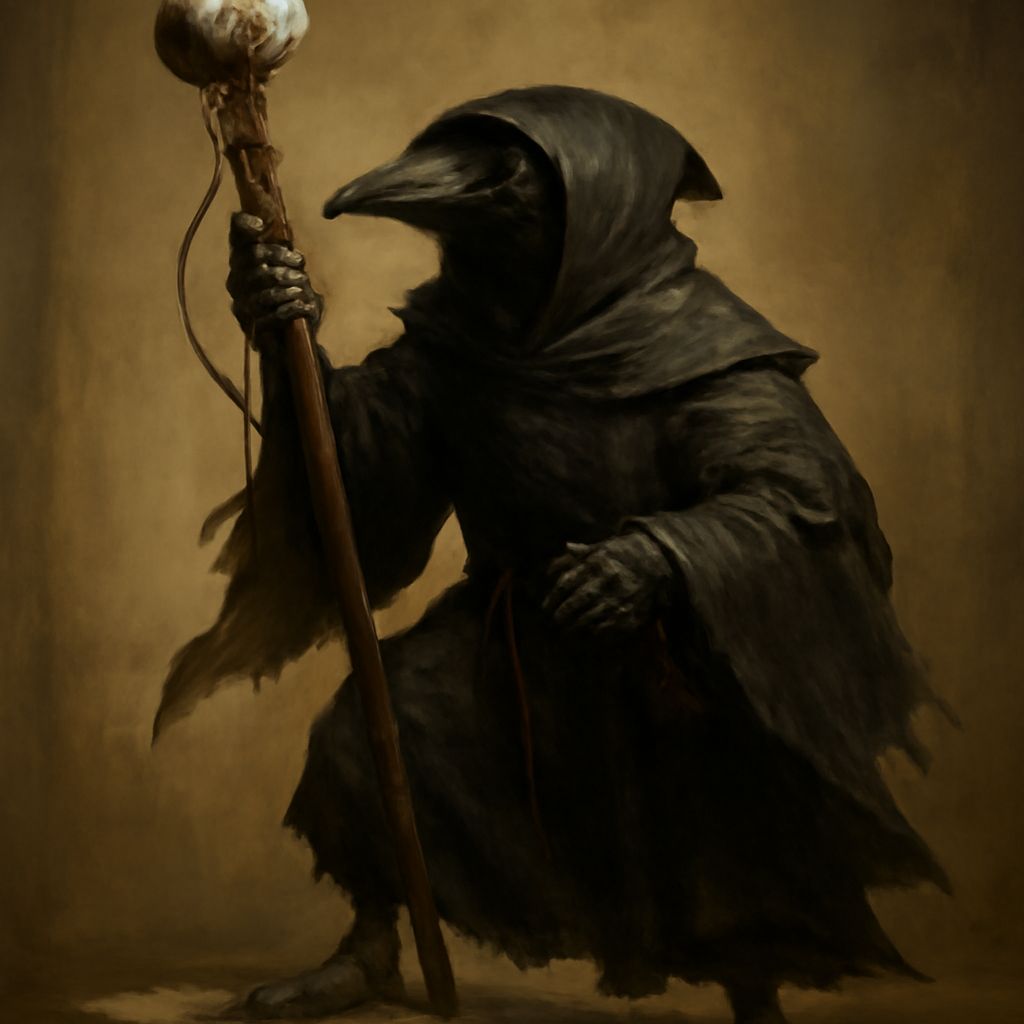
A bell’s clear ring can give a guard an easy name to call across a battlefield; a quiet scrape can tell the story of a locksmith who prefers not to be noticed. Both make memorable names for a kenku, and neither requires you to perform a perfect sound effect at the table.
The 2014-era fifth-edition Volo’s Guide to Monsters presents a version of kenku associated with mimicry and speech restrictions; the 2022 Mordenkainen Presents: Monsters of the Multiverse offers different playable traits. Agree with your DM which rules your table uses. The 2022 book listing identifies that source, while a D&D Beyond character example shows a kenku whose name comes from a personal history. The names below are creative suggestions, not a mandatory naming rule.
Start with a sound that matters
Some kenku names work like a tiny recording: the sound points to a place, a person, or a turning point. When naming your kenku, choose a remembered sound and translate it into a word the group can say. These original options offer different starting points:
- Latchclick — a quick lock snapping shut; a former courier learned to secure messages before leaving a room.
- Rainneedle — drops tapping a metal roof; a watchful scout grew up beneath a leaky observatory.
- Kettlehum — the first tremor of a boiling kettle; an innkeeper’s apprentice listens for trouble while preparing tea.
- Parchrustle — pages shifting in a quiet archive; a researcher remembers the night a lost map surfaced.
- Mastcreak — a ship’s timbers under strain; a sailor once heard that warning before a storm.
- Glasschime — a struck bottle’s high note; a musician marks each safe return with a small toast.
A kenku’s chosen name need not describe a profession forever. A retired burglar called Latchclick might now open doors for people in need. That contrast gives the party something to discover instead of turning the name into a one-note joke.
Match the name to the adventure
Other kenku names can be drawn from a warning, a natural rhythm, or a voice. For a kenku naming idea, imagine where each sound was heard and who gave it meaning:
- Hushstep — the hush and footfall of a mentor who taught patience.
- Threetaps — a repeated signal between siblings separated by a city wall.
- Frogrill — a frog’s rolling call, remembered from a ranger’s flooded home.
- Coalpop — a spark cracking in a forge where a young adventurer found shelter.
- Lowtoll — a distant bell heard on the day a healer made a difficult promise.
- Quickwhirr — a clockwork wheel spinning just before an inventor’s first success.
For a kenku character’s name, decide whether it refers to a comforting memory, a warning, or an ambition. A warning such as Lowtoll gives the DM a useful hook; a hopeful sound such as Glasschime can make a home base feel personal. Either can fit a serious campaign.
Make it easy to use aloud
The most evocative kenku names still need to work in quick conversation. Say your kenku character’s chosen name at normal speed, then ask another player to repeat it. If Parchrustle catches in the mouth, use Rustle as a party nickname while keeping the longer form on the character sheet. The character may introduce the name with a sound, a spoken word, or a gesture, depending on the agreed rules and your preference.
You can describe the sound instead of making it: “My character introduces herself with the click of a latch; call her Latch.” That lets everyone follow the scene without making another player guess. A kenku’s name can also have a private version used by family and a shorter public version used by companions.
Consider a conventional name
A name for a kenku adventurer can be a conventional personal name, a family name, or a nickname inherited from a community. Mira, Davin, and Tavi are straightforward options; Mira Glasschime combines a familiar given name with a sound-linked byname. A kenku’s personal name might be chosen, received from a friend, or changed after an important event.
When choosing among kenku names, pick Threetaps if a signal and a missing sibling suggest the story you want; choose Mira if you want a simple spoken introduction; choose Mira Glasschime if you want both. Tell the group which form they should use before the first scene.