A locked door is more interesting when the party can hear someone arguing on the other side—and can find another way in. A 5e dungeon generator can draw the rooms quickly; the DM’s job is to turn their connections into choices with consequences.
Generate a layout or sketch your own
Open donjon’s 5e Random Dungeon Generator. Choose a dungeon level and party size, adjust the room layout and corridors, then generate a map. The 5e random dungeon tool offers downloads including a map without secret doors or labels and a PDF.
A dungeon generator 5e DMs can customize helps when a blank page slows preparation. Choose a small site and look for a branching route. A generated 5e dungeon map may contain extra rooms; select a handful.
You can get a similar result by hand: draw an entrance, a central chamber, a goal, and a side room, then connect the side room to the goal as an alternate route. A manual 5e dungeon generator can use room ideas on slips of paper. Draw one and decide why it belongs. Digital maps are faster; hand-drawn ones give you control over connections.
Turn rooms into a situation
Give the place a purpose before stocking it. Who built it, who is there now, and what do they want? A 5e random dungeon generator can suggest a trap or monster; you decide how it relates to the party’s goal.
For example, make the goal a stolen bronze seal needed to open a village granary. Tie the random dungeon generator’s 5e surprises to whoever stole it. Adapt this original example to a generated dungeon for 5e or draw it yourself.
- Entrance hall: Muddy tracks lead toward the guardroom. A narrow drain also leads to the cistern; moving through it is noisy but avoids the main door.
- Guardroom: A nervous guard has orders to keep intruders out but wants safe passage home. The guard can bargain, raise an alarm, or fight. A chalk mark on the wall points toward the cistern’s maintenance hatch.
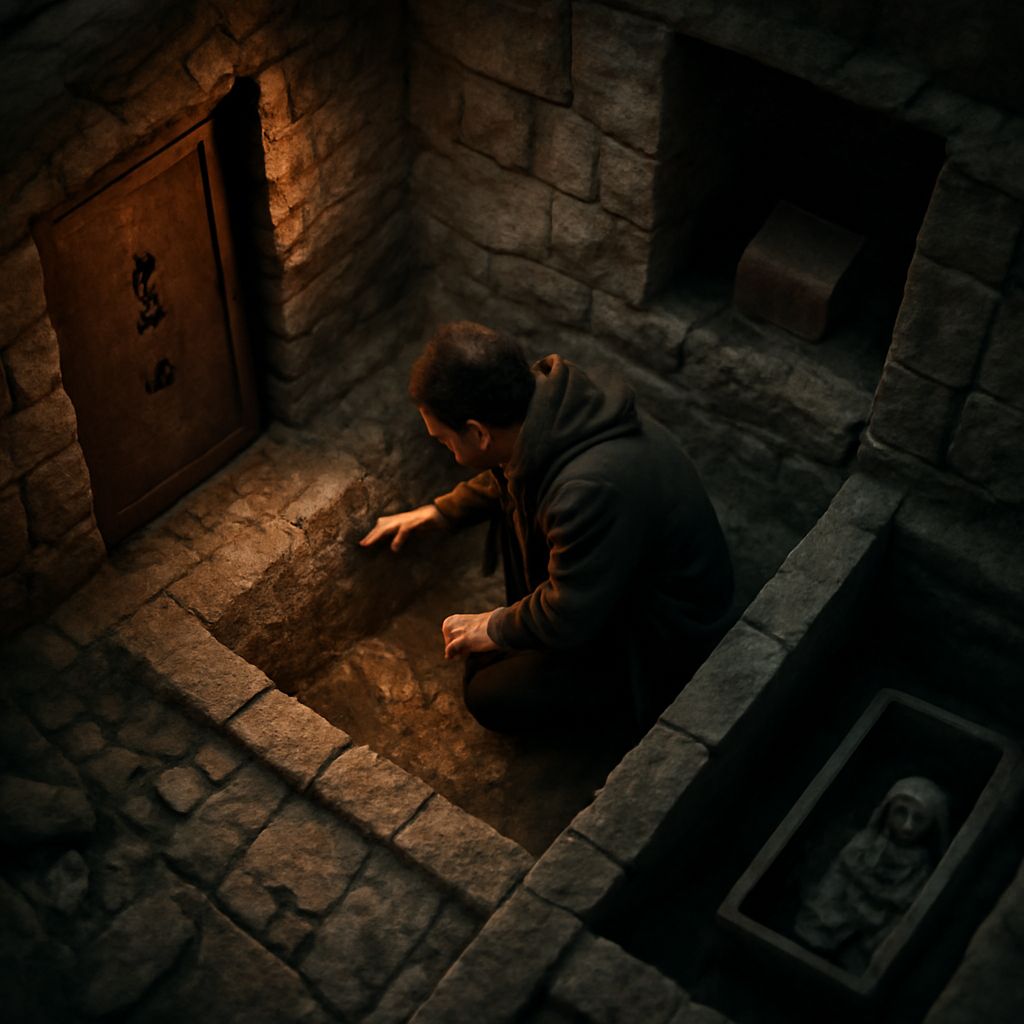
- Cistern: A loose chain opens the hatch into the vault. It also rattles a bell in the guardroom unless the party muffles it. Water stains show that the chain moves; no single roll is needed to reveal the route.
- Vault: The seal rests on a plinth beside a ledger naming the person who ordered the theft. The main door connects to the guardroom; the hatch connects to the cistern. Taking the seal solves the immediate problem, while the ledger offers a lead for the next session.
A dungeon generator 5e groups use at the table needs more than a fight in each room. Here, the players can talk their way through the guardroom, take the noisy drain, or combine both routes. If the alarm sounds, the guard has time to secure the vault door; the seal remains reachable through the hatch. A failed approach changes the situation without ending the adventure.
Set difficulty for your table
A fifth-edition dungeon generator may offer creatures and hazards; choose them after checking your party’s level, resources, and the rules version you use. The dungeon generator 5e DMs consult may list threats, but review their actual abilities and the effects of multiple encounters before accepting them. A party low on spells may struggle with a fight that looks modest on paper.
For the cistern, a DM using the 2024 D&D Free Rules could call for a Dexterity check to muffle the chain under pressure. The rules describe difficulty class (DC) 10 as easy and DC 15 as medium; choose a DC for the circumstances, not because the map says so. Failure could ring the bell rather than seal off the only path.
Let the guard talk and keep the ledger useful if the fight is avoided. Use the generated 5e dungeon as material for choices.
Keep this beside the map
With a dungeon generator 5e DMs can use for preparation, mark the entrance and goal, show at least two routes, give each obstacle a clue, and decide what changes if the party makes noise. Before play, check encounters against your chosen rules and place a reward that advances the party’s objective.