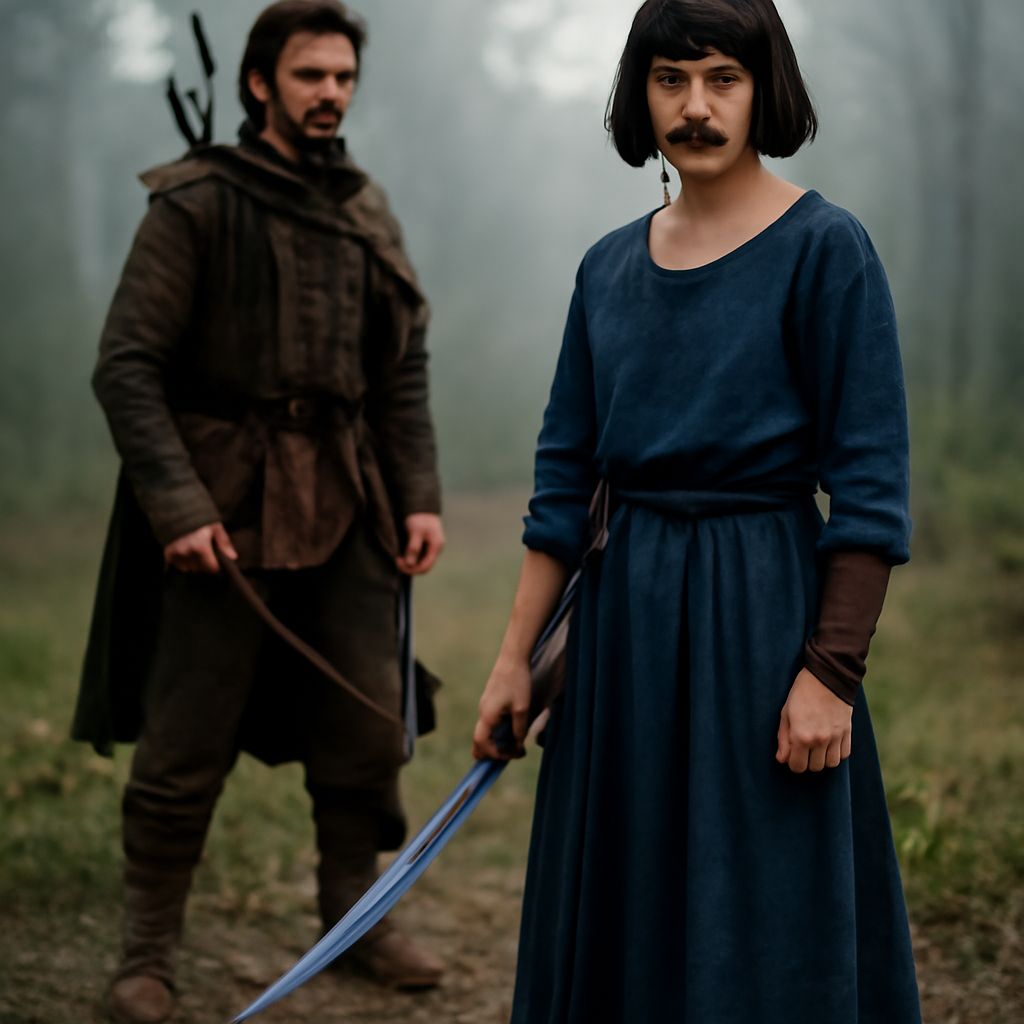
Choose the right ranger path and your contribution becomes clear: a companion can cover another part of the battlefield, a Hunter can read a marked enemy, and a Fey Wanderer can carry a conversation as confidently as a weapon. The best fit depends on what you enjoy doing on ordinary turns as well as in a climactic fight.
This comparison uses the fifth-edition 2024 Player’s Handbook ranger and its four subclasses: Beast Master, Fey Wanderer, Gloom Stalker, and Hunter. A ranger chooses a subclass at level 3 and gains further subclass features at levels 7, 11, and 15. These are revisions: the 2014 Player’s Handbook introduced earlier Beast Master and Hunter versions, Xanathar’s Guide to Everything presented an earlier Gloom Stalker, and Tasha’s Cauldron of Everything offered Fey Wanderer and an optional Primal Companion. Check which books and version your table uses.
Compare the play patterns
| Subclass | Defining contribution | Best suited to | Main tradeoff |
|---|---|---|---|
| Beast Master | A scalable primal companion | Coordinating two positions and helping allies | Companion commands compete for attention and bonus actions |
| Fey Wanderer | Fey-inflected damage and social ability | A party needing a negotiator as well as a scout | Less focused on commanding a permanent companion |
| Gloom Stalker | Darkness, ambush, and timed bursts | Stealthy approaches and dangerous openings | Its strongest stealth identity depends on circumstances |
| Hunter | Adaptable attacks and information about marked prey | Reading enemies and adjusting between encounters | Several benefits depend on target placement or the mark |
All ranger subclasses share the base class’s skills and combat tools. The subclass determines what extra decisions you make and what your allies can plan around. Consider the campaign’s likely terrain, social scenes, and encounter spacing before choosing.
Beast Master: coordinate with a partner
At level 3, the Beast Master gains a Primal Companion, choosing a beast of the land, sea, or sky. Its form affects how it moves and where it can contribute: a flying companion can reach a high ledge, while a land companion can support allies on the ground. The rules give the companion a defined stat block; describe its appearance to fit the character.
This ranger subclass suits a player who likes managing position. In combat, the companion acts on your initiative and needs a command for actions beyond its default behavior. That command can use your bonus action, creating competition with other bonus-action choices. At level 7, Exceptional Training expands what the commanded companion can do with its bonus action, while level 11’s Bestial Fury strengthens its attacks and interaction with hunter’s mark.
The 2024 companion resembles the optional version in Tasha’s, but its armor and attack damage scaling changed. Use the stat block belonging to your chosen rules rather than combining the two. Wizards’ comparison describes the revision.
Fey Wanderer: bridge the social gap
Fey Wanderers bring a touch of the Feywild to weapon attacks and conversation. At level 3, Dreadful Strikes adds psychic damage under its conditions, while Otherworldly Glamour supports Charisma checks and grants a relevant skill proficiency. This can make the ranger a credible spokesperson in a party whose other members prefer investigation or combat.
Among ranger subclasses, this one makes a strong choice for a campaign that moves between courts, strange bargains, and the wild. At level 7, Beguiling Twist offers a response when charm or fear takes hold—or is resisted—within the feature’s rules. At level 11, Fey Reinforcements adds a summoning option. The subclass rewards social attention, but it still needs other characters’ knowledge and relationships to turn a negotiation into a plan.
Gloom Stalker: make darkness an advantage
The Gloom Stalker thrives when the group scouts carefully and chooses its approach. Its level-3 features support initiative, darkvision, and hiding from creatures relying on darkvision in darkness. Dread Ambusher also adds damage to a hit a limited number of times. Use those bursts when removing or weakening a particular threat changes the encounter.
The 2024 version differs from the older Xanathar’s version: Dread Ambusher no longer grants the same opening-round extra attack. At level 11, Stalker’s Flurry expands its offensive choices, including an option to frighten foes. Darkness is valuable but situational: in a brightly lit negotiation or an exposed field, the character must rely more on the ranger’s broader toolkit.
Hunter: read and adapt
The 2024 Hunter learns a marked creature’s immunities, resistances, and vulnerabilities through Hunter’s Lore. That information can help allies choose damage types. Hunter’s Prey then offers a choice between extra damage against a wounded creature and another attack against a nearby different target. You can change that choice after a short or long rest.
Compared with other ranger subclasses, Hunter offers an especially clear way to adapt to the next encounter. Its level-7 defensive choice also changes on a rest; at level 11, its marked-target feature can spread extra damage to another creature. A party that shares observations can make the most of its information, while a group facing isolated foes may prefer the single-target option.
Choose for the table
Pick Beast Master if directing a companion sounds exciting; choose Fey Wanderer when the party needs a social explorer. Gloom Stalker fits a group that enjoys stealth and decisive positioning, while Hunter rewards players who assess prey and adjust after rests. Discuss the campaign’s expected scenes with the group: ranger subclasses feel most distinct when their strengths give everyone a reason to make a plan together.