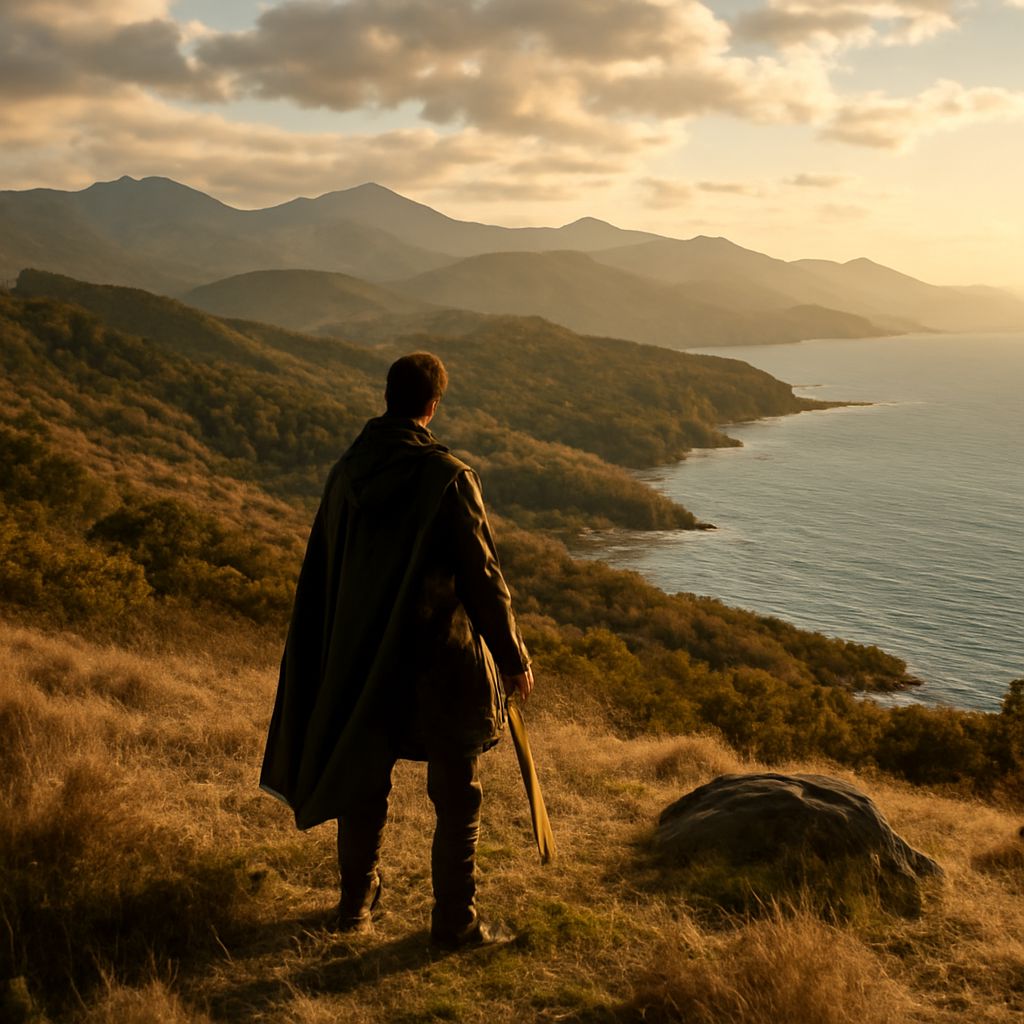
Choose a port, a road, and a reason to leave the city, and you have the beginnings of a campaign. The Sword Coast in D&D offers all three: busy harbors face the sea, trade routes join distant settlements, and forests and mountains open into the interior. A party can investigate a merchant’s problem one session and follow its consequences into the wilderness the next.
This overview uses the fifth-edition Sword Coast Adventurer’s Guide, a setting book describing the region in the late 15th century DR, and its broad view of northwestern Faerûn. Individual adventures and campaigns can set events at different dates, so a city’s circumstances may change with the story.
Find your bearings
The Sword Coast lies on the western edge of Faerûn, beside the Sea of Swords. Its name suggests a shoreline, but a useful regional view reaches inland to roads, settlements, forests, and mountain passes. Across the water lie islands; northward the route leads toward colder lands, including Icewind Dale.
On the Sword Coast, DND travelers encounter distances that make the journey part of the adventure. D&D Beyond’s road series describes a roughly 750-mile route between Waterdeep and Baldur’s Gate using roads and stretches of wilderness. That example is a journey with stops and choices, not a fixed travel time for every table.
A map is most useful when read as a network. A harbor can provide passage by ship; a road brings caravans and news; a forest trail may offer a shortcut at the cost of exposure. Decide what the party needs to carry, whom it can trust along the way, and where it can rest.
Three cities, three starting moods
Waterdeep is a large port associated with trade, influential figures, and masked rulers. Start here if you want crowded streets, competing patrons, and secrets hidden behind respectable doors. A job protecting a shipment can introduce both a city’s politics and the road beyond it.
Neverwinter, farther north, provides a strong gateway to the North and the lands around Neverwinter Wood. For a Sword Coast DND campaign, a party leaving this city might follow a missing expedition inland or investigate trouble affecting travelers. A forest, a ruined site, and a settlement seeking help can all belong to the same journey.
Baldur’s Gate, to the south, is another major trading city. It suits a story where commerce, opportunity, and difficult bargains meet. The party might accept an escort contract there, then discover that the cargo attracts attention from more than one faction. The Forgotten Realms overview places these cities within a network of trade ways and surrounding wilderness.
Follow the roads, leave the roads
Between the great ports, smaller communities give a journey its rhythm. A caravan stop can offer supplies and rumors; a village can give the party a personal reason to leave the highway. On the Sword Coast, DND adventures gain scale when a local problem connects to a decision made in a distant city.
The Trade Way is a natural spine for a traveling campaign. Along it, merchants may hire guards, rivals may pursue the same cargo, and an unexpected detour can lead to a neglected ruin. The coast also invites sea voyages: a ship can move the story to an island or bring a new rival into port. Inland, the party can trade easy access to markets for exploration in woods, hills, or old strongholds.
These are directions for a campaign, not a requirement to visit every landmark. Ask your Dungeon Master which maps, sourcebooks, and dates the game uses; a familiar city name can carry a different situation in another era.
Pick a starting point
Choose Waterdeep for urban intrigue and patrons, Neverwinter for a route into northern wilderness, or Baldur’s Gate for trade and hard bargains. For a Sword Coast DND journey built around exploration, begin in a smaller settlement between the ports and let a road lead the party toward whichever city its decisions make important.