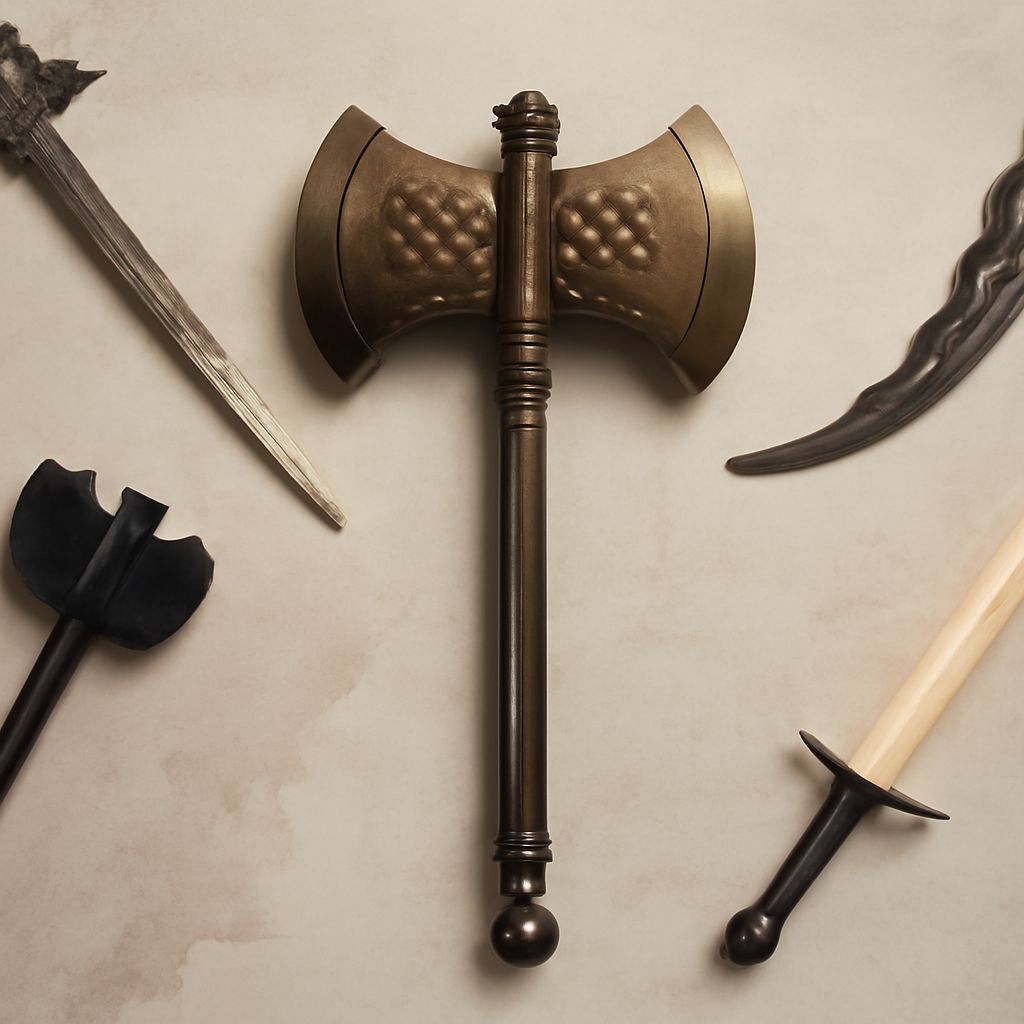
The damage die depends on how many hands you use: a battleaxe in 5e deals 1d8 slashing damage in one hand or 1d10 in two. The one-handed grip leaves room for a shield; the two-handed grip trades that protection for a larger damage die.
This guide uses the 2014 fifth-edition rules in the official SRD 5.1. The 5e battleaxe is a martial melee weapon costing 10 gp and weighing 4 pounds. Its defining property is “versatile (1d10).” That number is the damage die used for a melee attack with two hands, not a bonus added to the normal die.
What proficiency changes
When you attack with a battleaxe, 5e lets you add your proficiency bonus to the attack roll if you are proficient with the weapon. Martial weapon proficiency covers it; a specific feature granting proficiency with the battleaxe also works. Check your class and other character choices for proficiency.
Without proficiency, you can still swing a battleaxe in 5e, but omit the proficiency bonus from the attack roll. Proficiency does not add its bonus to the damage roll. For a 5e battleaxe attack, use your Strength modifier on both the attack roll and, on a hit, the damage roll. The weapon lacks the finesse property, so its ordinary attack does not offer a Dexterity alternative.
One attack, two possible dice
With a battleaxe, 5e changes the damage die when you make the attack using two hands. It does not grant another attack for changing your grip. An additional attack needs its own rule, such as a class feature.
Consider a 1st-level fighter with Strength 16, a +3 Strength modifier, and a +2 proficiency bonus. The fighter is proficient with martial weapons and attacks a creature with Armor Class 15:
- Roll a d20 and add +3 for Strength and +2 for proficiency. A roll of 12 becomes 17, enough to hit AC 15.
- If the fighter attacks one-handed, roll 1d8 + 3 slashing damage. A 5 on the die gives 8 damage.
- If the attack instead uses two hands, roll 1d10 + 3 slashing damage. A 5 on that die also gives 8 damage; the larger die allows a higher possible result.
These examples use an ordinary hit, with no magic weapon, critical hit, or other modifiers. In the 5e rules, a battleaxe wielder without proficiency would add only +3 to the example attack roll. The same 12 would total 15 and still hit this target.
Shield or stronger swing?
The 5e battleaxe gives you a practical choice when a fight turns dangerous. A shield adds 2 to Armor Class while wielded, favoring a character expecting repeated attacks. Using a shield without proficiency brings penalties described in the armor rules. A shield also takes an action to don or doff, so plan the switch rather than treating it as free in the middle of a turn.
For a battleaxe, 5e offers a modest increase from 1d8 to 1d10 when both hands make the melee attack. The average of the weapon die rises from 4.5 to 5.5 damage, an increase of one per hit before other modifiers. Behind allies, that extra point may be worthwhile. At a narrow doorway, the defensive bonus can matter more across several attacks.
Compare a greataxe
Like a battleaxe in fifth edition, a greataxe is a martial melee weapon. It deals 1d12 slashing damage and has the heavy and two-handed properties, so it cannot be used for its attack while wielding a shield. Compared with a 5e battleaxe, it offers a larger weapon die but gives up the one-handed option. Its heavy property can also impose disadvantage on attacks by Small creatures under SRD 5.1.
When choosing between the greataxe and a battleaxe, 5e rewards looking at the whole character: expected incoming attacks, available proficiencies, and whether a free hand or shield matters to your plan. The 5e versatile battleaxe creates no extra attacks on its own.
Choose a shield with the battleaxe when staying upright is your priority; use the two-handed grip when you can afford to trade defense for a little more damage. Before either choice, check that your character has proficiency with the weapon and, if you use one, the shield.