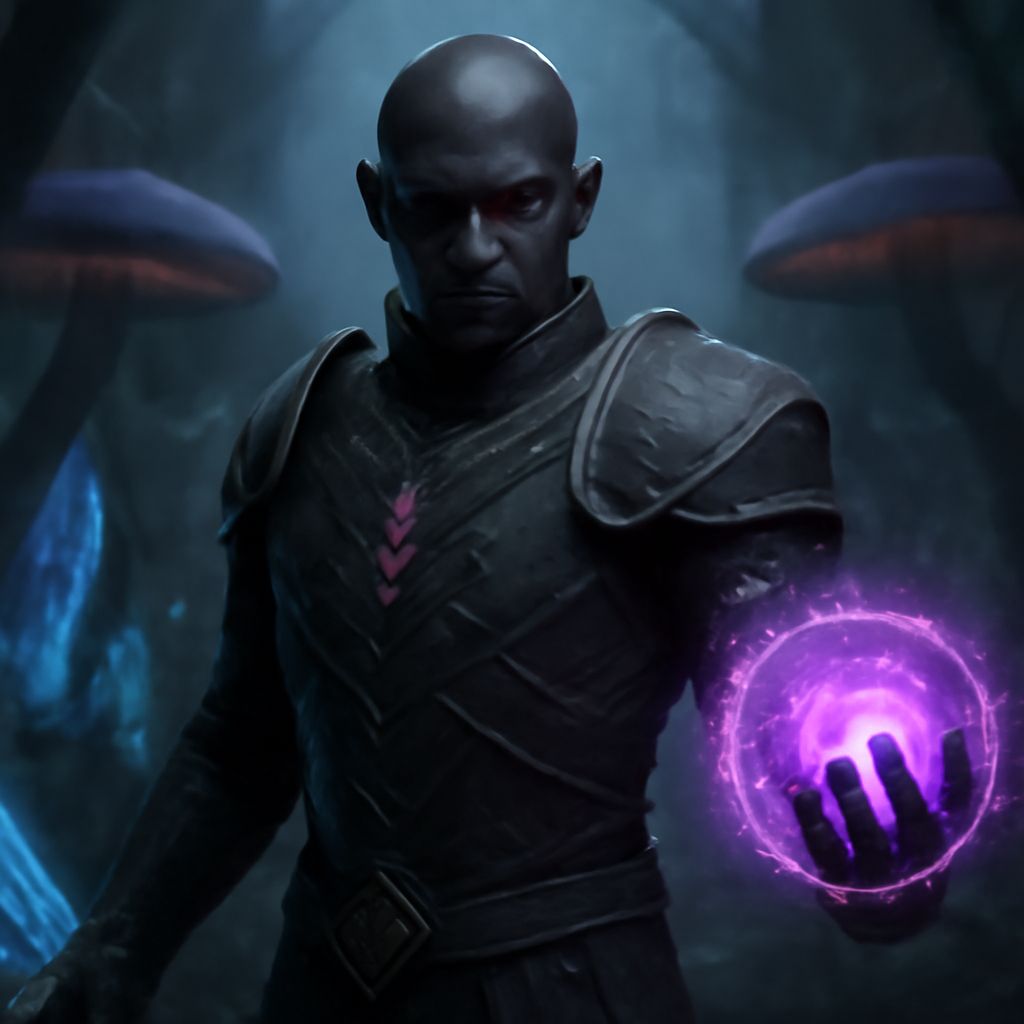
Use these three compact generators for different naming jobs: Warforged names come from chosen function and personal identity, Drow last names signal inherited house or lineage, and Fiend names distinguish infernal order from abyssal violence. Select one bank, combine its parts, and then adjust the result until it sounds natural at the table.
We have included complete examples so we can hear how each naming convention works rather than treating every fantasy name as interchangeable.
Warforged Name Generator: Build Names from Function and Identity
A Warforged often chooses a name after its construction or during its first independent life. Start with a function bank, then add an identity bank. The first part communicates what the character was built to do; the second reveals a memory, value, material, or self-chosen symbol.
Function bank: Sentinel, Bastion, Courier, Warden, Artificer, Sapper, Archivist, Envoy, Reclaimer, Watcher.
Identity bank: Ember, Brass, Seven, Willow, Latch, Vesper, Flint, Quiet, Rivet, Dawn.
Combine one entry from each bank, or use a single entry if the character prefers a blunt designation. Examples include Sentinel Ember, a former guard unit whose identity grew around protecting others; Archivist Seven, a cataloguing construct that retained its inventory number; and Courier Dawn, a messenger that considers every journey a new beginning.
We can also reverse the order for a more personal sound: Flint Warden feels like a chosen identity that later acquired a public role. Avoid making every Warforged name mechanical. “Quiet” or “Willow” can show that the character has moved beyond the purpose assigned at creation.
Drow Last Names: House Patterns, Sounds, and Surname Cues
Drow last names usually function as house names, so they communicate lineage, status, allegiance, or an old political connection. They often use liquid sounds, sharp consonants, doubled letters, and occasional apostrophes. A good Drow surname should feel like a family institution rather than a personal nickname.
Use this substantial surname bank for noble houses, merchant families, priestly lines, or disgraced clans:
- Auvryndar
- Baerlyl
- Daermon
- Eilserv
- Faertala
- Hlaund
- Mizzrym
- Nizzrym
- Ousstyl
- Qilue
- Rilynt’tar
- Ssapri
- Teken’duis
- T’sarran
- Uthegental
- Velkyn
- Xorlarrin
- Zauviir
- Vhaun’drin
- Mylylith
Names such as Hlaund, Velkyn, and Ousstyl sound clipped and established, making them useful for old military or noble houses. Rilynt’tar, Teken’duis, and Vhaun’drin use apostrophes to create a more ceremonial, multi-part sound. Mizzrym and Nizzrym use repeated consonants that suggest a recognizable family branch.
For complete examples, Zynrae Xorlarrin sounds like a high-status heir from a powerful house, while Veldrin Ssapri suggests a lesser-known line with a sharper, more secretive reputation. We should keep the surname stable across siblings unless a political break, adoption, or house exile is part of the character’s story.
Fiend Name Generator: Separate Infernal and Abyssal Name Banks
Fiend names work best when we decide the creature’s origin first. Infernal names tend to sound deliberate, hierarchical, and legally precise. Abyssal names are harsher and less orderly, using abrupt consonants and aggressive endings.
Infernal formula: choose one prefix, one core, and one ending.
- Prefixes: Ash, Bel, Caz, Draz, Mal, Vez
- Cores: or, ev, ir, az, ul, oth
- Endings: -ar, -in, -ach, -eus, -iel, -oth
Examples include Ashoriel, a persuasive contract-maker; Belirach, a disciplined war captain; and Malazoth, an influential fiend whose name carries ceremonial weight. “Belorzin, Keeper of the Ninth Seal” is a complete title-bearing example: the formal name and office reinforce infernal hierarchy.
Abyssal formula: choose one onset, one violent core, and one hard ending.
- Onsets: Gr, Kr, Zh, Vro, Sk, Urz
- Cores: a, o, av, ar, u, ekh
- Endings: -gash, -vul, -n, -rak, -z, -oth
This produces names such as Gravul, Krothrak, Zhargash, and Urzekh. Zhargash the Bone-Taker feels like a roaming predator because the name is rough, compressed, and difficult to say gently. We should not use the infernal bank for an Abyssal demon unless the contrast is intentional.
Choose and Adapt Each Name Type Without Mixing Conventions
Choose a Warforged name when identity is primarily self-created: Warden Flint tells us both the former duty and the chosen personality. Choose a Drow surname when family or house affiliation matters: Veldrin Xorlarrin places the character inside a lineage. Choose an infernal name for rank, bargains, and authority, or an abyssal name for appetite, chaos, and menace.
We can adapt each result without losing its logic. Shorten a Warforged name to “Flint” after the character rejects its old function. Add a house title before a Drow surname, such as “First Daughter of Ssapri.” Give an infernal name an office, but give an Abyssal name an epithet earned through violence. The key rule is simple: function names are chosen, Drow surnames are inherited, and Fiend names reveal origin and threat.