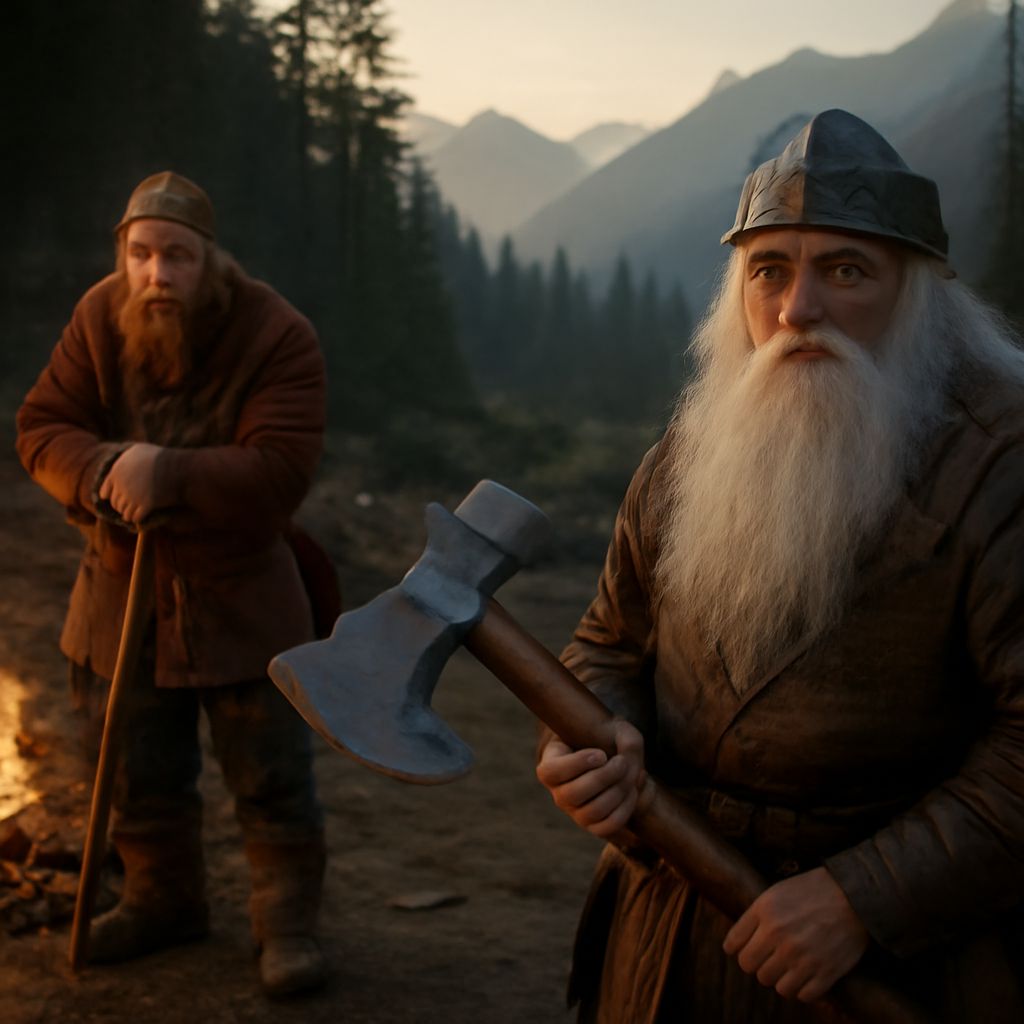
We can build Dwarven mountain names, Druid names, and Orc surnames as three separate naming systems, each with its own logic. Mountains should sound like geology plus history, druids should sound like living affinity, and orc family names should sound like lineage or deed.
That difference matters. A dwarven mountain is a place name, so it should feel carved from stone and memory. A druid name is a personal name, so it should feel chosen, seasonal, or sacred. An orc surname is a clan marker, so it should carry ancestry, battle, or a hard-earned reputation.
Dwarven mountain names by feature and history
Generator formula
We can make dwarven mountain names with this pattern:
[Stone feature] + [shape or depth] + [history marker]
Use roots from cliffs, veins, crags, peaks, forges, and cairns. Then add a memory of what happened there: oath, siege, burn, crown, fall, or forge. The result should feel like a landmark that has been worked on, fought over, or revered for centuries.
- Ironcrown Peak
- Deepforge Range
- Embervein Hold
- Runebreak Crest
- Cairnfall Mountain
- Hammerdeep Spire
- Blackgranite Tor
- Oathcinder Ridge
- Goldvein Summit
- Stonewake Crag
- Skarnwatch Mount
- Redanvil Spur
If we want a more ancient feel, we can add a historic event instead of a physical trait: Siege, Fall, Song, Hearth, or Crown. That keeps the name rooted in dwarven history rather than just landscape.
Druid names by natural affinity
Generator formula
Druid names work best as personal names tied to a chosen bond with nature:
[Soft given name] + [plant, season, weather, or animal root]
We can use leaves, moss, reeds, dawn, rain, fern, bracken, ash, thorn, lark, wren, or willow. The sound should stay gentle or flowing, because these names usually belong to individuals rather than places or clans.
- Aven Reed
- Briar Moss
- Eira Fern
- Fenn Willow
- Liora Bracken
- Orin Birch
- Rill Sage
- Syl Dew
- Talan Rowan
- Nera Thistle
- Iris Ash
- Cael Wren
For stronger worldbuilding, we can make the second element reflect a druid’s specialty. A healer might be Rill Sage, a storm-talker might be Syl Dew, and a forest guardian might be Briar Moss. The meaning comes from affinity, not ancestry.
Orc surnames by lineage or deed
Generator formula
Orc surnames should feel inherited, earned, or feared. We can build them in two ways:
Lineage: [Clan or ancestor root] + [hard animal, bone, metal, or tooth element]
Deed: [violent or decisive verb] + [object, wound, or trophy]
Lineage names tell us who the family descends from. Deed names tell us what the family did to become known. Both should sound blunt and memorable.
- Blacktooth
- Stonefang
- Ironhide
- Wolfskull
- Grimspear
- Ashhorn
- Bonebreaker
- Gatecrush
- Fortburn
- Steelrend
- Oathsnatch
- Kingslayer
For a lineage-based surname, we can treat the first element as a clan marker: Ironhide suggests a hard ancestral line, while Stonefang feels older and more tribal. For a deed-based surname, the action should be obvious enough to carry its own story.
Choose and adapt each name type
We should keep the naming systems separate unless the setting deliberately mixes them. A mountain name should describe a place and its history. A druid name should describe a person’s bond with nature. An orc surname should describe a family’s bloodline or reputation.
- For dwarven mountain names: start with rock, metal, or depth, then add a remembered event.
- For druid names: keep the sound soft and let the meaning come from plants, seasons, weather, or animals.
- For orc surnames: make the name hard, short, and story-heavy, with either a clan root or a battle deed.
- To adapt quickly: swap one root at a time. Ironcrown can become Embercrown; Briar Moss can become Briar Fern; Bonebreaker can become Gatebreaker.